Mindbody Reviews: What Studio Owners Are Actually Saying

An honest look at Mindbody’s strengths, frustrations, pricing, and website experience from a wellness website designer and virtual assistant.
Choosing studio software is rarely as simple as comparing feature lists. A platform can look impressive during a demo and still feel frustrating once you are using it every day.
Mindbody is one of the best-known business management platforms in the fitness and wellness industry, but studio owners have very mixed feelings about it. Some trust it to manage complex schedules, memberships, payments, and multiple locations. Others describe it as expensive, clunky, and difficult to leave.
To understand the full picture, I reviewed Reddit conversations from studio owners, instructors, and clients, then compared those experiences with what I have seen while using Mindbody as a website designer and virtual assistant for Pilates, yoga, barre, and sculpt studios.
This is not a sponsored review. It is an honest look at where Mindbody works well, where owners seem to struggle, and what you should consider before committing to it.
Mindbody at a Glance
Best for: Established, growing, or multi-location fitness and wellness studios that need extensive features.
Biggest strength: Deep business-management tools and strong Branded Web Tools for website booking and purchasing.
Most common complaint: A complicated backend, rising costs, and a steep learning curve.
My take: Mindbody is powerful and dependable, but smaller studios may not need enough of its features to justify the cost and complexity.
Mindbody: Powerful, Established—and Frequently Frustrating
Mindbody is one of the most established names in fitness and wellness software, and it is also one of the most polarizing.
Across the Reddit conversations I reviewed, studio owners rarely described it as simple or easy. More often, they described it as powerful, reliable, expensive, clunky, and difficult to leave once their business was fully built inside it.
That combination is important because Mindbody is not necessarily a platform people dislike because it cannot do enough. In many cases, the frustration comes from the opposite problem: it can do so much that everyday tasks may feel more complicated than they need to be.
Mindbody serves a wide range of businesses across fitness, wellness, and beauty, including Pilates studios, yoga studios, barre and sculpt concepts, gyms, salons, spas, and appointment-based wellness businesses. It can work for a single-location studio, but its depth may make the most sense for established businesses, larger teams, and multi-location brands that need advanced scheduling, reporting, staff management, marketing, and client-account tools.
What Studio Owners Seem to Appreciate
Even in threads filled with criticism, several meaningful strengths came up repeatedly.
Studio owners described the core backend as dependable and capable of handling complex business needs such as memberships, credits, discounts, cancellations, pricing options, private appointments, courses, workshops, and client accounts. One course-based studio owner who had used Mindbody for more than two years said the core system was solid and reliable, even though they had frustrations with other parts of the platform.
That same owner also praised Mindbody’s branded website widgets and said they integrated attractively into the studio’s website. Their experience was not entirely positive—they found limitations in the mobile app, analytics, marketing tools, and reporting—but they still trusted the platform’s core functionality enough to keep working with it rather than immediately switching.
Mindbody’s consumer app is another real advantage. One Reddit user said they use the app to discover new studios and prefer businesses that connect with Mindbody. For studios in competitive areas, that marketplace visibility may introduce the business to clients who were not already searching for it by name.
Its size and longevity also matter. Mindbody has had years to develop a wide range of features and integrations, and some studio owners found that the alternatives they reviewed did not offer enough functionality for their business. In other words, Mindbody may not always be the most enjoyable system to use, but it can support levels of complexity that simpler platforms may not handle as well.
My Experience as a Website Designer and Virtual Assistant
From my perspective as a website designer and virtual assistant working with Pilates, yoga, barre, and sculpt studios, Mindbody’s Branded Web Tools are one of its strongest features.
I have used Mindbody to embed live class schedules into studio websites, create booking options for private sessions, and build purchasing widgets that allow clients to complete checkout directly through the website.
That may sound like a small detail, but it makes a meaningful difference in the client experience.
When someone visits a studio website, finds the right offer, purchases it, and books without being pushed into a completely disconnected page, the process feels more polished and trustworthy. The studio maintains more of its brand experience, and the client encounters fewer opportunities to become confused or abandon the booking process.
The embedded tools also reduce manual website maintenance. When a studio updates its schedule inside Mindbody, the website widget reflects those changes automatically. The owner does not have to update the booking software and then separately edit the website every time a class, instructor, or time changes.
From a website and client-journey perspective, that is one of Mindbody’s clearest advantages.
The backend experience is different.
Mindbody includes a very large number of settings, tools, and workflows. Creating schedules, setting up private sessions, organizing services, configuring staff access, and building the branded widgets can take training and practice. Once you understand the system, the process becomes more manageable, but it is not software I would describe as instantly intuitive.
That matters for smaller studio owners who may be handling everything themselves. A feature-rich platform can be helpful, but only when the owner has the time, support, or team capacity to learn and manage it properly.
What Reddit Users Are Frustrated By


The Reddit feedback was not especially warm.
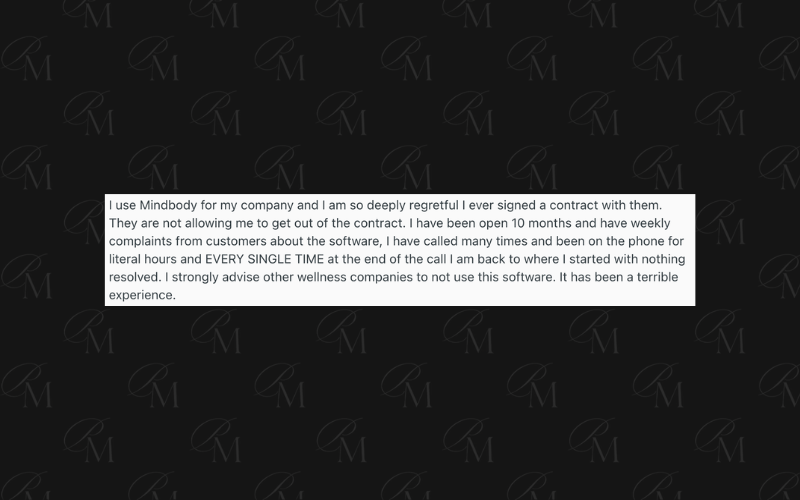
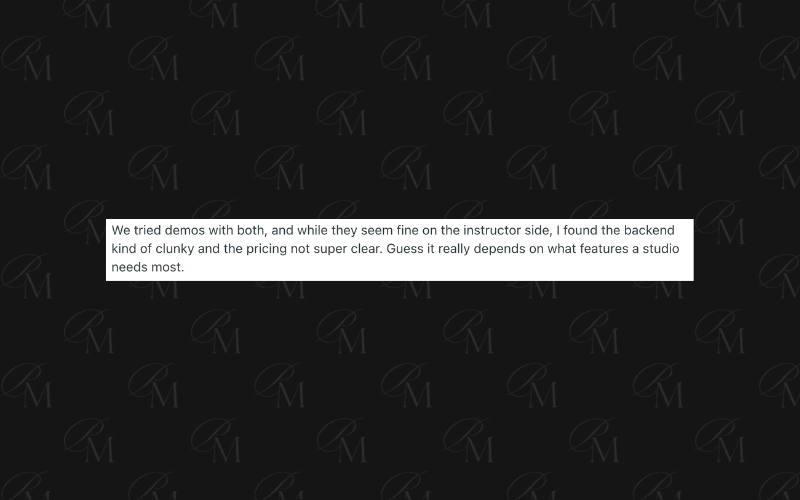
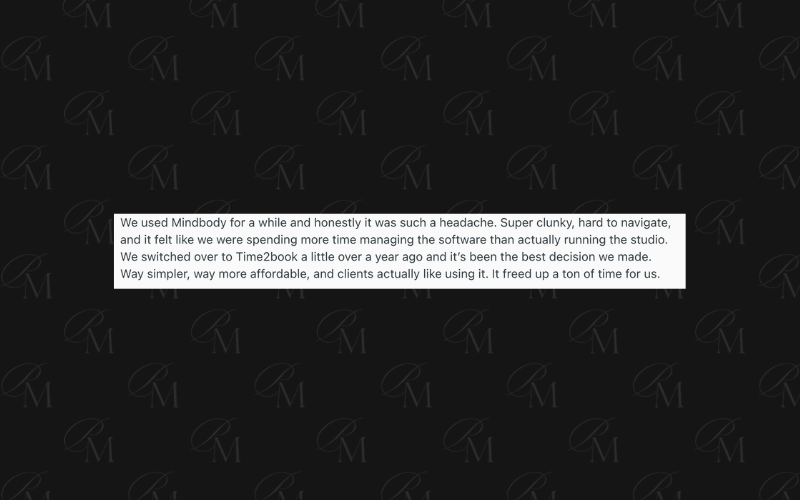
The most common complaint was that Mindbody feels clunky and outdated. Several users said the platform required too much time and effort for tasks that should have been straightforward. Others felt they were spending more time managing the software than running the studio.
Pricing was another major concern. Mindbody now lists a Starter plan beginning at $99 per month, per location, but its more advanced plans require custom pricing. Total costs can also increase with payment processing, add-ons, advanced marketing tools, branded apps, and additional locations.
This becomes especially relevant for smaller businesses. A studio may be attracted to Mindbody because of its long feature list, only to realize later that it is paying for far more functionality than it regularly uses.
Customer support experiences were mixed. Some Reddit users described long calls, unresolved issues, and difficulty reaching someone who could actually solve the problem. Others said support was responsive and knowledgeable once the issue moved beyond the first level.
This suggests that support quality may depend heavily on the issue, the representative, and how deeply the studio is using the platform.
The client-facing app also received criticism. One course-based studio said it could not use the app properly because courses did not display in a way that worked for its business. Other users mentioned client frustration with account and payment tasks.
Reporting, analytics, and marketing were another area of mixed feedback. Mindbody offers extensive tools, but some owners said the reports they needed were missing or that the built-in marketing suite was too limiting for their workflow.
The recurring frustration was not always that the platform lacked a feature entirely. It was often that the feature existed but did not work in the exact way the studio needed.
Why Some Studios Stay Even When They Are Unhappy
One of the most interesting patterns in the Reddit discussions was how difficult it can be to leave Mindbody.
Once a studio has years of client records, memberships, package balances, schedules, payment information, and operating procedures inside the platform, migration becomes a major project. Studio owners may worry about losing historical data, creating confusion for clients, or spending weeks rebuilding their workflows elsewhere.
One commenter said leaving would require a significant amount of time and could result in lost data during the transition. Another studio owner said they were so embedded in Mindbody that they preferred to keep pushing the company to improve the system rather than immediately move to another platform.
This is an important consideration before signing up.
The decision is not only about whether the software works for the studio today. It is also about how easily the business could move its information, clients, memberships, and payment setup later if the relationship stopped working.
The Reddit Reviews Need Context
Not every Reddit comment should be treated equally.
Some discussions included representatives from competing software companies recommending their own platforms. Other threads were accused by commenters of being promotional or misleading. Those comments are less useful than detailed accounts from people who explain what kind of studio they operate, how long they used the platform, which tools they relied on, and what specifically worked or failed.
The most valuable Mindbody feedback came from users who were able to acknowledge both sides:
The core system can be reliable.
The branded website tools can be excellent.
The platform can support complicated operations.
The interface can still feel cumbersome.
The costs can still be difficult to justify.
The marketing, reporting, app, or support experience may still fall short.
That nuance is more useful than simply labeling Mindbody as good or bad.
Who Mindbody May Be Best For
Mindbody may be a strong fit for:
Established studios with complex operational needs
Multi-location fitness or wellness businesses
Studios offering both group classes and private appointments
Businesses that want clients to purchase and book directly through embedded website tools
Studios that value discovery through the Mindbody consumer app
Owners who need extensive integrations, reporting, staff controls, and service options
Teams that have the time or support to complete proper setup and training
It may be less ideal for:
Solo instructors
Very small studios with straightforward scheduling needs
Owners who want to set up software quickly without training
Businesses looking for transparent, simple pricing
Studios that only need basic booking, memberships, and communication
Owners who strongly prioritize a modern, minimal backend experience
My Honest Takeaway
Mindbody appears to be a platform that studio owners often respect more than they enjoy using.
Its core tools are deep and dependable. Its Branded Web Tools can create a seamless booking and purchasing experience directly on a studio’s website, which is a genuine advantage from my perspective as a website designer. It can also manage complex schedules, multiple service types, large client lists, and multi-location operations.
But that power comes with a tradeoff.
The backend takes time to learn. The pricing can increase as a business adds the features it actually needs. Support experiences vary, and once a studio is deeply established in the system, switching can become difficult.
I do not think Mindbody is automatically a poor choice because studio owners complain about it online. I do think a business should be realistic about what it is signing up for.
The question is not simply whether Mindbody has the features your studio needs.
It is whether your studio needs enough of those features to justify the cost, training, and complexity.