Fitness Studio Launch Guide: What to Organize Before Opening Day

Opening a fitness studio is exciting, but it also comes with more details than most new studio owners expect.
In the beginning, the vision usually feels clear. You can picture the space, the classes, the music, the equipment, the energy, the community, and the way you want people to feel when they walk through the door for the first time.
But as your fitness studio launch gets closer, the details start to multiply. Suddenly, it is not just about the space anymore. It is the website, the schedule, the intro offer, the booking software, the class descriptions, the welcome emails, the policies, the printed materials, the QR codes, the launch announcements, and the client questions you have not even been asked yet.
That is the part of opening a studio that can start to feel overwhelming. Not because you do not know what you are doing, but because every little piece touches another little piece. Your website connects to your offer. Your offer connects to your booking flow. Your booking flow connects to your emails. Your emails shape how prepared people feel before they ever walk in.
Whether you are opening a Pilates studio, yoga studio, barre studio, Lagree studio, strength studio, or boutique wellness space, your clients begin experiencing your studio before they ever take a class. They visit your website. They look for your schedule. They compare your offers. They decide whether they understand what you do. They wonder what to book first. They look for signs that your studio feels polished, prepared, and easy to trust.
That is why a strong fitness studio launch needs more than a beautiful space. It needs a clear path. In this guide, we will walk through the main pieces to organize before opening day so your studio feels easier to understand, easier to book, and more ready to welcome clients from the very first interaction.
Why Your Fitness Studio Launch Needs More Than a Beautiful Space
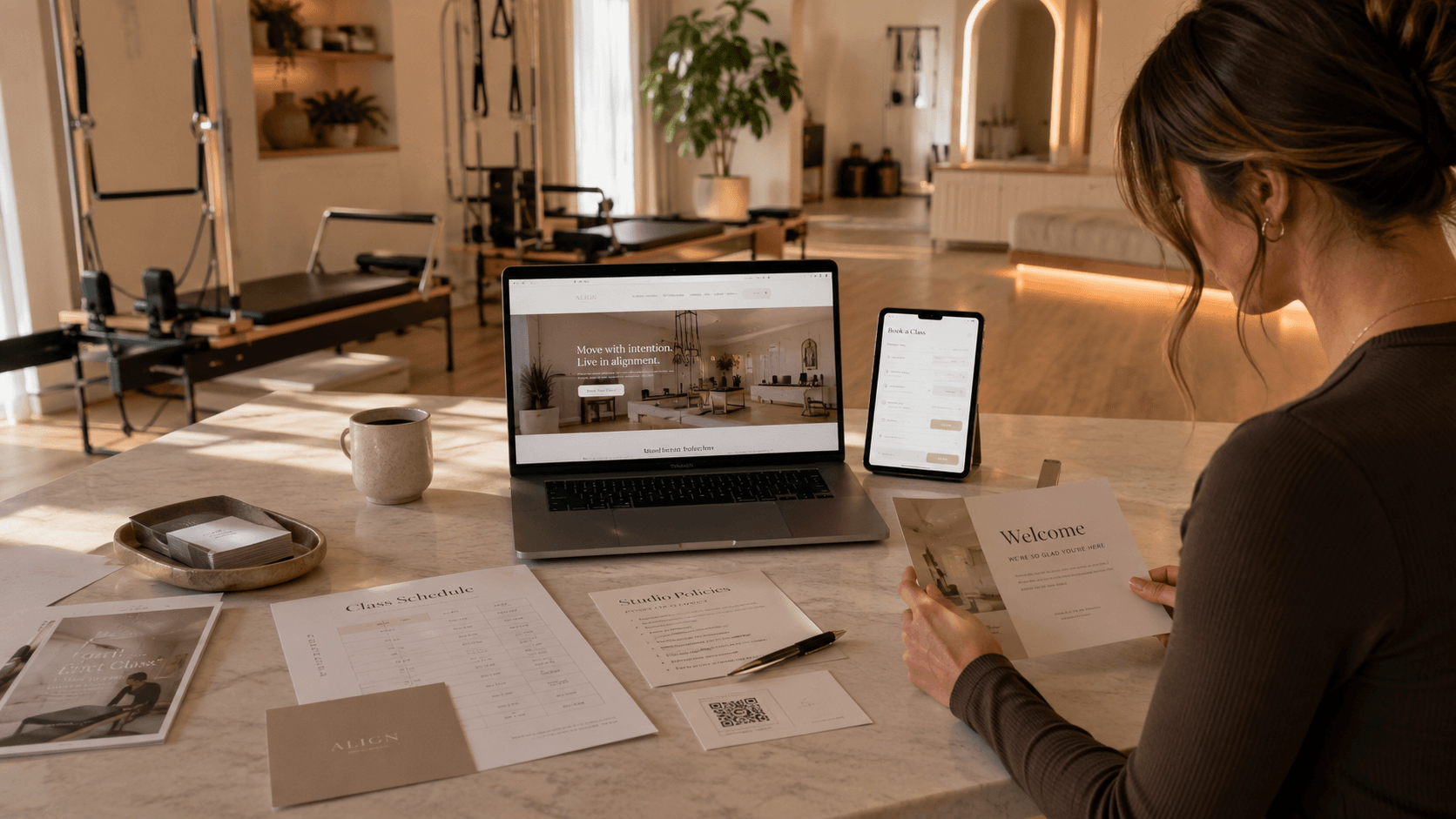
A beautiful studio matters. Of course it does. Your space sets the tone, your branding creates recognition, and your aesthetic helps people feel connected to the experience you are building. A thoughtful, beautiful environment can absolutely help someone feel excited to be there.
But a beautiful space alone is not what makes a launch feel smooth.
Before someone ever walks into your studio, they may already be asking themselves a dozen small questions. What kind of classes do you offer? Is this beginner-friendly? Where are you located? How do I book? What should I buy first? What should I expect? Do I need to bring anything? Is this worth the price? Does this studio feel like it knows what it is doing?
Those questions are answered through the details. Your website answers some of them. Your booking software answers some of them. Your emails answer some of them. Your class descriptions, policies, offer names, front desk signage, and launch materials answer the rest.
When those pieces feel connected, your fitness studio launch feels more polished and easier to trust. When they feel scattered, even a beautiful studio can feel unclear from the outside. The goal is not to make every single detail perfect before opening day. The goal is to make sure the most important client-facing pieces are clear enough that someone can understand your studio, feel confident booking, and arrive prepared.
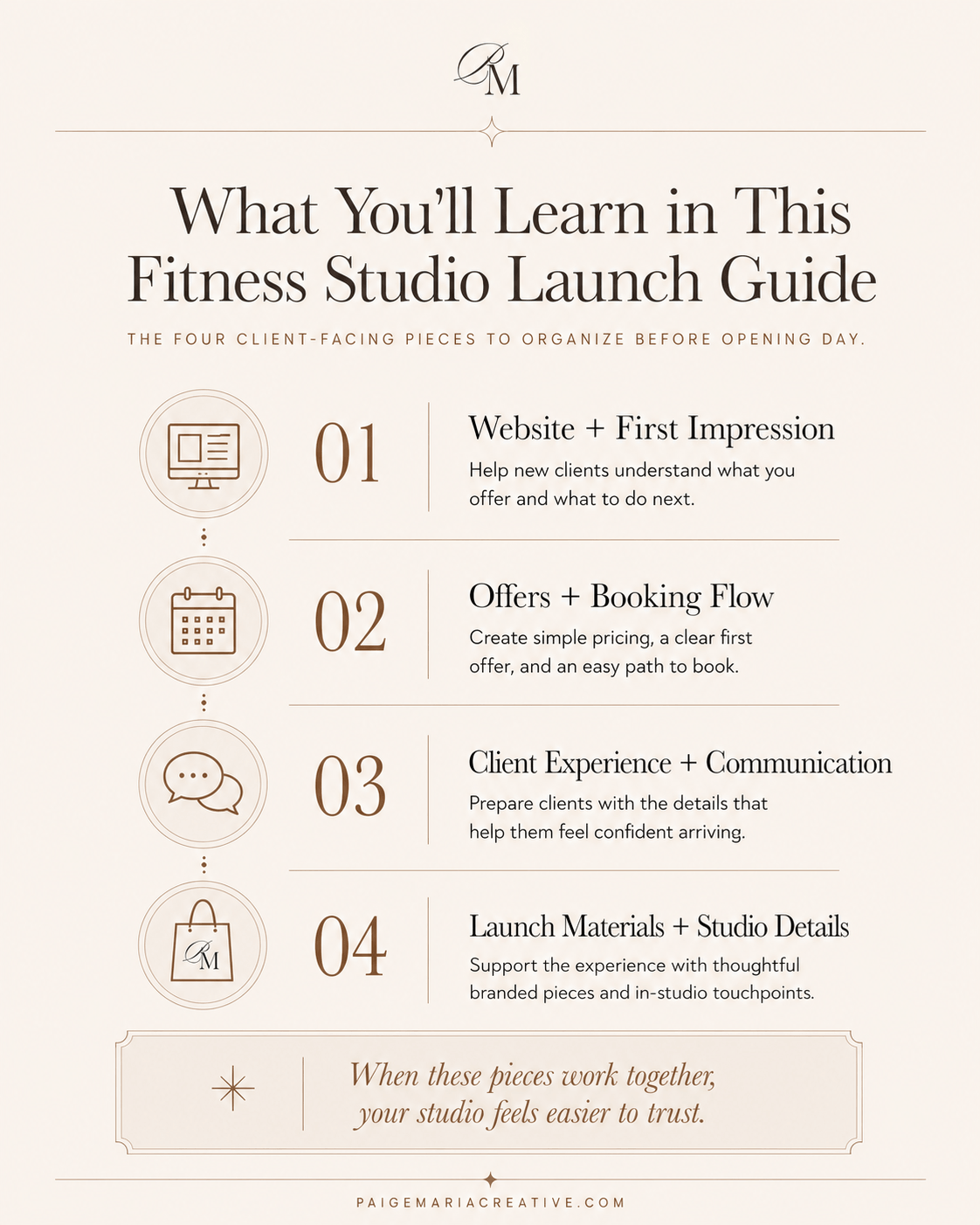
1. Website + First Impression
Your website is one of the most important pieces of your fitness studio launch because it is often the first place someone goes to understand what you offer. A potential client may hear about your studio from Instagram, a friend, a local event, a sign outside your space, or a Google search. But once they are interested, they usually need somewhere to go next.
That place is your website.
Before opening day, your website should help a new client quickly understand what your studio is, who it is for, where it is located, how to get started, and what to do next. This does not mean your website needs to explain every single detail about your business. It simply means the most important information should be easy to find, easy to understand, and easy to act on.
A new visitor should not have to guess what kind of studio you are opening. If you are a Pilates studio, yoga studio, barre studio, Lagree studio, strength studio, or wellness space, make that clear quickly. Beyond the type of studio, your website should also communicate the kind of experience people can expect. Is your studio high-energy and music-driven? Slow, intentional, and form-focused? Beginner-friendly? Athletic? Restorative? Small group? Private and personalized?
The more specific you are, the easier it is for the right people to recognize that your studio is for them.
A strong fitness studio website also gives new clients a simple path. They should be able to understand what you offer, who your classes are for, where your studio is located, how to view the schedule, how to purchase your intro offer, which class to try first, and what to expect before arriving. If people have to click around too many times to understand how to get started, they may leave before booking.
One of the most common mistakes during a fitness studio launch is focusing so much on how the website looks that the actual booking path becomes unclear. The design matters, but the flow matters just as much. Your website should look polished, but it should also quietly do the heavy lifting of guiding people toward the next step.
Your intro offer should also be easy to find. If you have a new client special, founding member offer, first-class offer, or presale membership, do not bury it three clicks deep. A new client should be able to understand what the offer includes, who it is for, how much it costs, when it expires, how to purchase it, and how to use it after purchasing.
During your fitness studio launch, your intro offer is often the bridge between interest and action. If someone is curious about your studio but not ready to commit to a full membership, this offer gives them a clear way to begin. Make it visible, simple, and easy to say yes to.
And finally, do not forget the mobile version of your website. Many potential clients will visit your website from their phone, which means your mobile site needs to be easy to read, easy to scroll, and easy to use. Before launch, check that someone can quickly understand what you offer, find the schedule, click the booking button, read your pricing, and fill out a form without frustration.
A website that looks beautiful on desktop but feels clunky on mobile can cost you bookings. Your mobile experience is not a small detail. It is a major part of your fitness studio launch.
2. Offers + Booking Flow
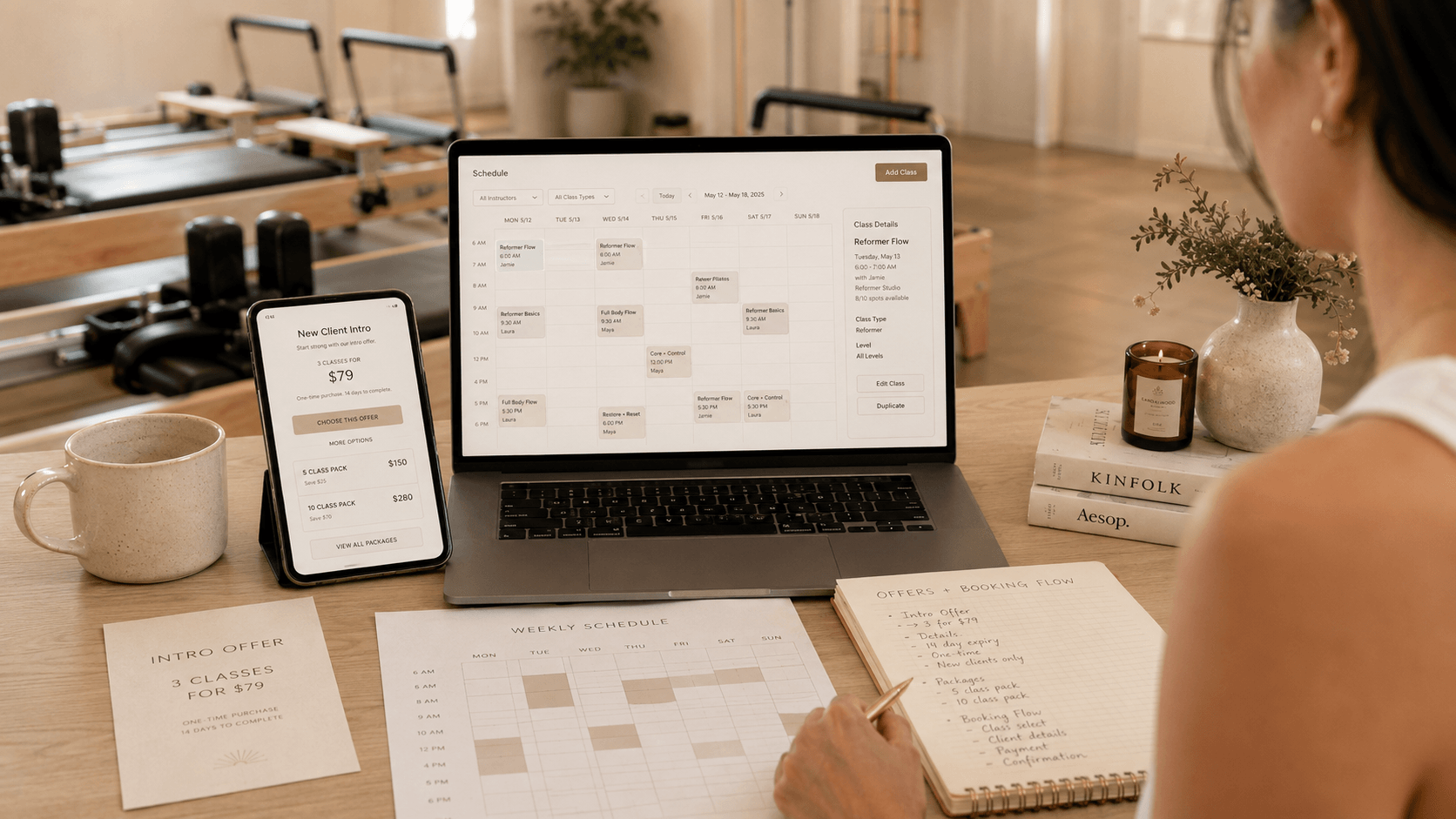
Your offer and booking flow are where interest turns into action. A new client may love the look of your studio, connect with your brand, and feel excited to try a class, but if the next step feels confusing, they may pause instead of booking.
Before opening day, your offers, pricing, schedule, and booking software should work together to help someone make a clear decision. This does not mean you need dozens of options. In fact, too many options can make it harder for a new client to choose. A strong booking flow helps someone understand where to start, what to buy, and how to book without overthinking it.
During your fitness studio launch, you may have several different offers available. You might have an intro offer, founding member membership, first-class special, limited-time presale, class packs, drop-in classes, monthly memberships, private sessions, workshops, or events. All of these may have a place in your business, but not all of them should compete for attention at the same time.
The question to ask is: what is the first offer I want a brand-new client to choose?
For many studios, this is an intro offer or founding member offer. That offer should be clearly named, clearly priced, and clearly connected to your booking flow. If your pricing structure feels confusing to you, it will probably feel confusing to your clients too.
Your pricing does not need to be overly simplified, but it does need to make sense. New clients should be able to understand the difference between your options and identify what is best for them. What is best for a first-time client? What is best for someone who wants to come once a week? What is best for someone who wants to come multiple times a week? What is the best value? What is the next step after the intro offer?
If every option looks equally important, people may struggle to choose. When planning your fitness studio launch, think about how your pricing is presented on your website and inside your booking software. Your offer names, descriptions, and layout should help people make a decision, not create more questions.
Your schedule matters here too. Your schedule is not just an operational tool. It is part of your client experience. A new client may look at your schedule and immediately decide whether your studio fits into their life. But they are also looking for clues. Are there beginner-friendly classes? Are the class names easy to understand? Are the times realistic for your audience? Are the instructors listed? Are the class descriptions helpful? Is it clear which class someone should take first?
If your classes have branded names, make sure the descriptions explain what they actually are. A clever class name can be fun, but it should not leave new clients guessing. During launch, clarity is more important than being overly clever.
One of the best things you can do before opening day is test the full booking process from a client’s point of view. Pretend you have never heard of your studio before. Go to your website. Find the intro offer. Click the booking button. Purchase the offer. Book a class. Read the confirmation email. Check what happens next.
As you go through that process, notice where anything feels clunky, confusing, repetitive, or unfinished. Was the schedule easy to find? Was the intro offer easy to purchase? Were the pricing options clear? Did the booking software feel simple? Did you receive the correct confirmation? Did the email tell you what you needed to know?
This is where many launch issues show up, and it is much better to find them before your clients do.
3. Client Experience + Communication
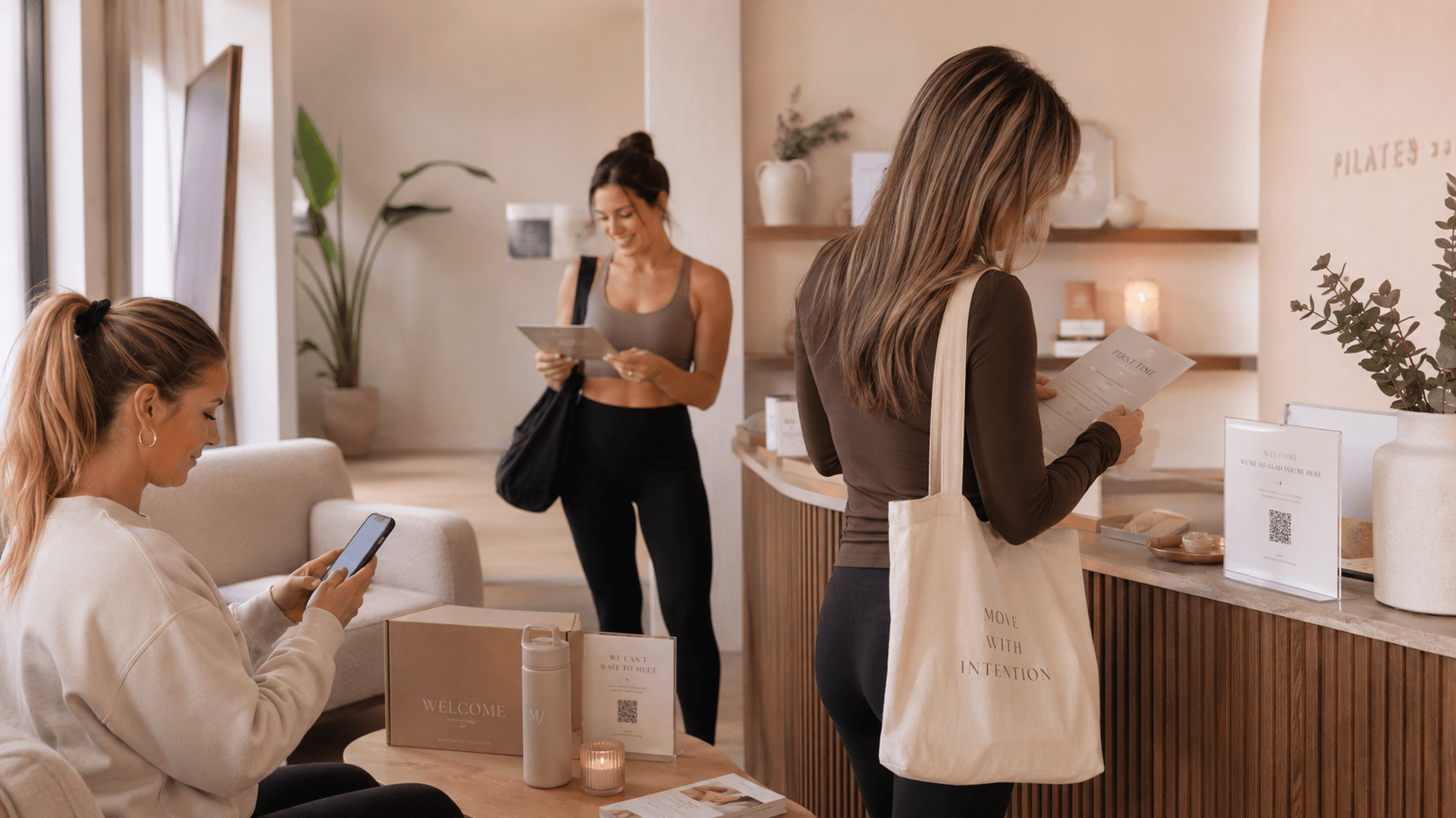
Your client experience begins before someone walks through your doors. It starts the moment they decide to book, read your confirmation email, look for what to bring, wonder where to park, or try to understand what their first class will feel like.
These small communication pieces may seem simple, but they carry a lot of weight. They help new clients feel prepared, reduce confusion, answer questions before someone has to ask, and make your studio feel thoughtful, organized, and ready.
Before opening day, your communication should help clients feel cared for from the first click to the first class.
A welcome email or confirmation email is one of the most useful pieces of your fitness studio launch. This email should answer the questions a new client is already wondering. What should they bring? What should they wear? When should they arrive? Where should they park? How do they check in? What should they expect in class? What should they do if they are running late? How do they cancel or reschedule? Who should they contact with questions?
A clear welcome email helps people arrive with more confidence. It also reduces the number of repetitive questions you and your team have to answer manually, which is especially helpful when you are already juggling a million other launch details.
Your FAQs are another important part of this. If you are opening a fitness studio, you can usually predict many of the questions new clients will ask. Do I need experience? Which class should I take first? Do I need grip socks? Where do I park? How early should I arrive? What is your cancellation policy? Can I come if I am pregnant, injured, or brand new? How do memberships work? What happens after my intro offer ends?
Your FAQ page does not need to be long, but it should be useful. You can include FAQs on your website, in your booking software, inside your welcome email, or as part of your printed studio materials. The goal is to make the first experience feel less intimidating.
Class descriptions also play a role in client communication. They should help clients choose confidently, especially if they are new to your method, class levels, or studio language. A strong class description should explain what the class is, who it is best for, what the pace feels like, whether it is beginner-friendly, what equipment is used, and what someone can expect.
For example, instead of only writing something like “a dynamic, full-body burn,” go one step further. Explain whether the class is accessible for first-timers, whether it is slower or faster-paced, and what kind of experience someone should expect. Clear class descriptions help the right people book the right class, which creates a better first experience for everyone.
And remember, your launch does not end when someone attends their first class. You also need to think about what happens next. Do they receive a follow-up email? Do they know how to use the rest of their intro offer? Do they know which class to try next? Do they receive a membership invitation? Do they get a reminder before their intro offer expires?
The first-class follow-up is a powerful part of your client experience. It helps new clients feel seen and gives them a clear next step. During your fitness studio launch, this can also support conversion from first visit to package or membership in a way that feels helpful instead of pushy.
4. Launch Materials + Studio Details

Your launch materials are the physical and digital pieces that help your studio feel real, polished, and ready. These are the things clients may see in your studio, receive in a welcome bag, scan from a card, pick up at the front desk, or notice during opening week.
They may seem like finishing touches, but they help shape the way people experience your brand. A thoughtful card, a clear QR code, a polished sign, or a simple printed guide can make your studio feel more established from day one.
Before opening day, your launch materials should support the experience you want clients to have, not just look pretty.
Not every studio needs the same materials, but many fitness studio launches benefit from a few polished pieces. You might need founding member cards, thank-you cards, studio info cards, referral cards, QR code cards, package or membership menus, front desk signage, open house materials, gift bag inserts, local partnership cards, first-time client handouts, or studio policy cards.
The best way to think about launch materials is to consider the moments where clients may need information. What do they need at the front desk? What would be helpful during an open house? What could go inside a founding member gift bag? What should someone receive after their first class? What might help someone understand your memberships or tell a friend about your studio?
The right printed piece can make that moment feel more thoughtful and clear.
QR codes and links are especially important to test before printing anything. If you are creating QR code cards, signs, flyers, or launch materials, make sure every code goes to the right page, offer, booking link, form, or schedule. Then look at the page someone lands on after scanning. Does it make sense? Is it mobile-friendly? Is the offer clear? Is the next step obvious?
A QR code is only useful if the experience after scanning feels clear.
Your launch materials should also feel connected to the rest of your client experience. If a printed card promotes your intro offer, the QR code should take someone directly to that offer or a page that explains it clearly. If a front desk sign mentions memberships, the pricing should match what is listed on your website and inside your booking software. If your welcome card tells clients to check their email for next steps, that email should actually be ready.
The more connected these pieces are, the more polished your fitness studio launch will feel.
Digital launch materials matter too. Before opening day, think through the graphics and announcements you may need for Instagram posts, Instagram stories, email announcements, founding member launch posts, open house invitations, local partnership graphics, schedule announcements, instructor introductions, class previews, countdown posts, and grand opening details.
You do not need to post constantly, but you do need clear messaging. People should know what is opening, who it is for, where it is located, when they can book, and how to get started.
What to Check Before Opening Day
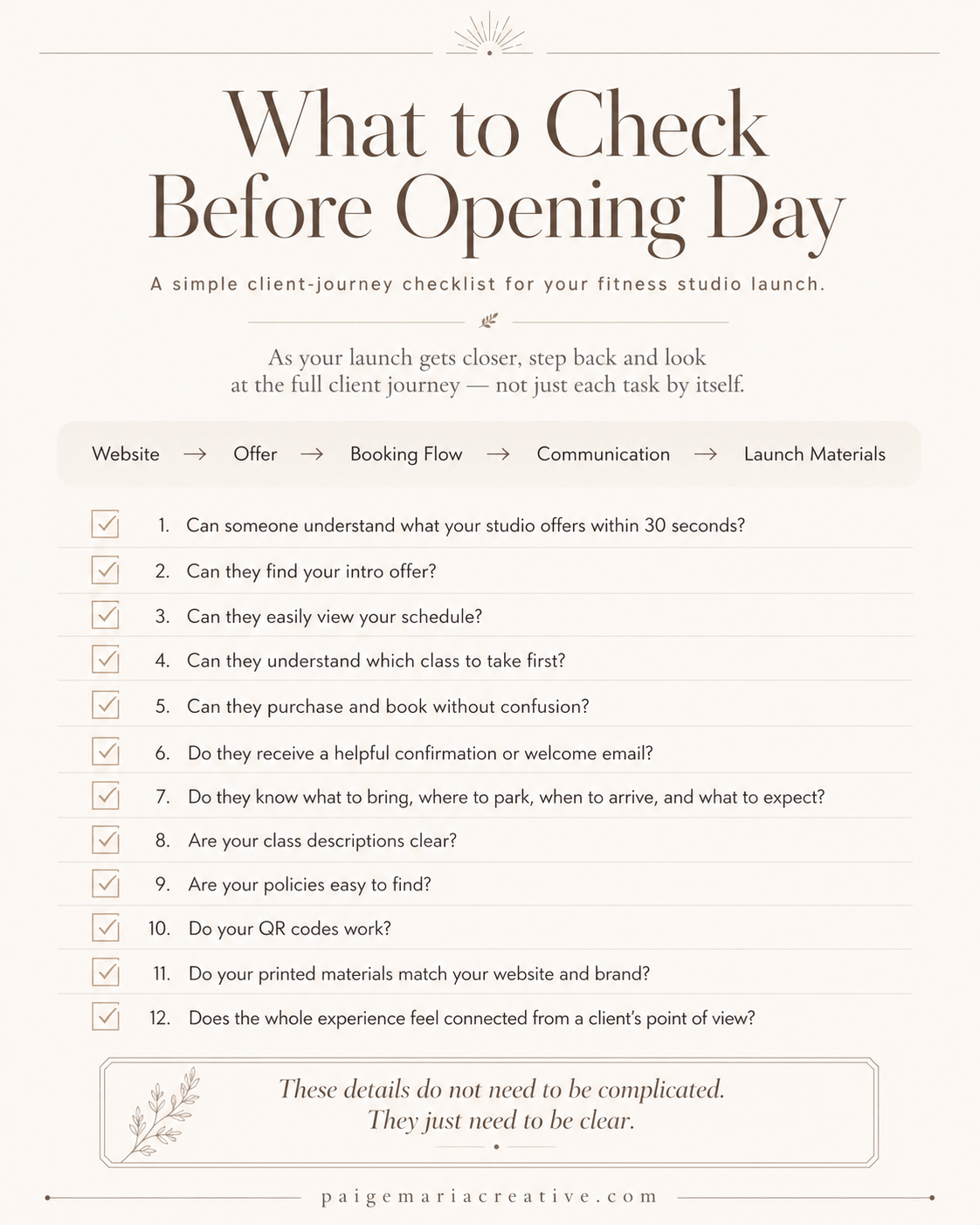
As your fitness studio launch gets closer, it helps to step back and look at the full client journey instead of only looking at each task by itself.
Your website leads people to your offer. Your offer leads people to your booking flow. Your booking flow leads people to your communication. Your communication shapes how prepared they feel. Your launch materials support the experience once they arrive.
Before opening day, ask yourself whether someone can understand what your studio offers within 30 seconds of landing on your website. Can they find your intro offer? Can they easily view your schedule? Can they understand which class to take first? Can they purchase and book without confusion? Do they receive a helpful confirmation or welcome email? Do they know what to bring, where to park, when to arrive, and what to expect?
Then look at the smaller supporting details. Are your class descriptions clear? Are your policies easy to find? Do your QR codes work? Do your printed materials match your website and brand? Does the whole experience feel connected from a client’s point of view?
These details do not need to be complicated. They just need to be clear.
Download the Studio Launch Clarity Map
If you are planning a fitness studio launch and realizing there are more details than you expected, I created a free guide to help you organize the pieces.
The Studio Launch Clarity Map is a guided planning tool for boutique wellness and fitness studio founders who want to organize their website, booking flow, client experience, and launch details before opening day.
It walks you through the client-facing pieces that shape your first impression, so your studio feels clear, connected, and ready before someone ever walks in. Use it to map out what feels ready, what feels scattered, and what needs support before opening day.
Get the Studio Launch Clarity Map
Need Help Bringing the Launch Pieces Together?
A clear fitness studio launch is not about having every single thing perfect. It is about making sure the pieces your clients interact with feel thoughtful, connected, and easy to trust.
At Paige Maria Creative, I support boutique wellness and fitness studio owners with the behind-the-scenes launch work that helps your studio feel organized before opening day. That may include your website design, booking flow, intro offer setup, class schedule, client emails, FAQ copy, launch materials, printed pieces, and the details that help your studio feel polished from the very first interaction.
Whether you are opening a Pilates studio, yoga studio, barre studio, Lagree studio, or boutique wellness space, you do not have to piece everything together alone.
Your clients do not need everything to be perfect. But they do need things to feel clear. And when things feel clear, they feel more confident booking.